
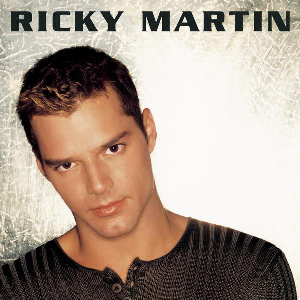
On this day in 1999, Ricky Martin’s self-titled English-language debut bowed at No. 1 on the Billboard 200, turning a months-long wave of momentum into one of the defining pop breakthroughs of the late ’90s.
The album did not come out of nowhere. The fuse had been lit at the 41st Grammy Awards earlier that year, when Martin performed “La Copa de la Vida” with the kind of force that changed the temperature of a room. The Recording Academy has since described that performance as a moment that brought Latin music center stage and helped push it into the U.S. mainstream. The song was already known internationally as the official song of the 1998 FIFA World Cup, but on Grammy night it became something else: a live-wire introduction for millions of American viewers who suddenly wanted to know exactly who that guy was.
By spring, Columbia Records had the answer ready. Ricky Martin arrived on May 11, 1999, as Martin’s first English-language album and his fifth studio album overall. Apple Music lists the project at 14 songs and just under an hour, and describes the record as a bid to win new listeners without losing the Latin pop audience that had already made him a star.
Two weeks later, the gamble paid off in numbers that were impossible to ignore. For the chart dated May 29, 1999, Ricky Martin debuted at No. 1 on the Billboard 200. Sony Music’s 25th anniversary vinyl listing says the album opened with 661,000 first-week sales, making Martin the first male Latin artist to debut at No. 1 on the Billboard 200.
That number matters because it shows how ready the audience already was. This was not a slow build. It was a door flying open. By the end of May 1999, Martin was not being introduced to mainstream pop. He was leading it.
The songs that built the moment
At the center of the album was “Livin’ la Vida Loca,” a single so immediate it felt engineered to short-circuit radio. The horns, the surf-rock guitar, the percussion, the vocal snap, the video, the suit, the movement: everything about it came built for maximum replay. Sony notes that the song topped the Billboard Hot 100 for five consecutive weeks and became Martin’s first No. 1 single on that chart.
The album around it was broader than one monster single. “She’s All I Ever Had” gave Martin a sweeping ballad lane. “Shake Your Bon-Bon” kept the dance-floor energy moving. “Spanish Eyes” leaned into drama and strings. “Private Emotion,” featuring Meja, added a soft-pop duet. “Be Careful (Cuidado Con Mi Corazón)” brought in Madonna, while the tracklist also included the Spanglish radio edit of “La Copa de la Vida” and a Spanish version of “Livin’ la Vida Loca.”
That mix was the point. Ricky Martin was not just an English-language crossover album with a few Latin touches pasted on. It was built as a pop event that could move between Top 40, dance floors, ballads, Spanish-language roots and global marketing without apologizing for any of it.
Why it mattered
The late ’90s music business loved categories, and Martin complicated them. He was a former Menudo member, a Puerto Rican pop star, a Spanish-language hitmaker, a stage performer, a television presence, and suddenly an American chart heavyweight. His success did not invent Latin pop, and it certainly did not make Latin music “new.” What it did was force the U.S. pop industry to admit that the audience was already there.
The Recording Academy points to the album and the Grammy momentum as a catalyst for the so-called “Latin explosion,” noting that the fervor surrounding Martin’s breakthrough helped bring artists such as Shakira, Enrique Iglesias and Marc Anthony further into the pop-culture foreground.
That phrase, “Latin explosion,” has always been imperfect. It can make decades of music, labor and influence sound like a sudden marketing discovery. Latin artists had been shaping American music long before 1999. But what happened with Ricky Martin that year was still a turning point. Major labels, radio programmers, video channels and award shows suddenly saw Latin pop not as a side lane, but as the main road.
And Martin had the timing. In 1999, pop was already in overdrive. Teen-pop was exploding. TRL mattered. CDs were still moving in huge numbers. Videos could make a song feel larger than radio. Into that environment came a performer who understood the stage, the camera and the chorus equally well.
A few details make the moment even bigger. The self-titled album was released in the same year that “Livin’ la Vida Loca” became a five-week Hot 100 No. 1. The album’s opening week of 661,000 copies was enormous even by late-’90s CD-boom standards. The record’s tracklist managed to fit Madonna, a World Cup anthem, English and Spanish versions of its biggest hit, and a ballad that became one of Martin’s signature slow songs.
More than 25 years later, the album still plays like a snapshot of pop music at the exact moment the century was about to turn. It is glossy, dramatic, rhythmic, sometimes over-the-top, and completely aware of its own charisma. That was the point. Ricky Martin did not whisper his way into the mainstream. He arrived with horns, flashbulbs and a chart receipt.
On May 29, 1999, Ricky Martin’s English-language debut did more than enter the Billboard 200 at No. 1. It made Latin pop unavoidable on American radio and proved that the crossover moment was not a novelty. It was a warning shot, a celebration, and a new pop blueprint all at once.