
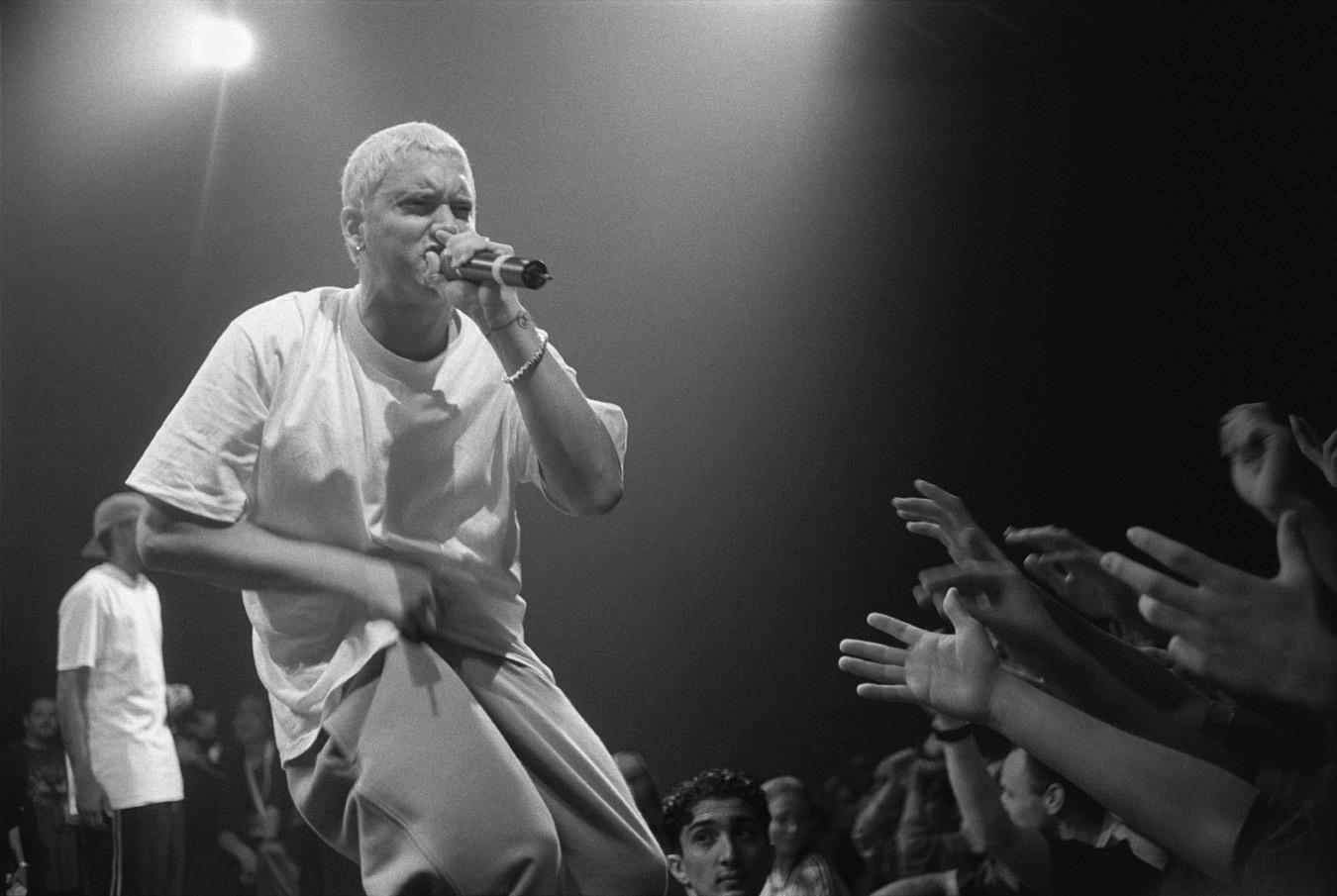
May 23, 2026: On this day in 2000, Eminem released The Marshall Mathers LP, the album that turned him from a controversial breakout rapper into one of the dominant figures in mainstream music.
Released by Aftermath and Interscope, The Marshall Mathers LP was Eminem’s third studio album and the follow-up to 1999’s The Slim Shady LP. It arrived at a moment when Eminem was already famous, heavily criticized and impossible to ignore. Instead of pulling back, he made an album that pushed harder into the tension around him: fame, anger, family conflict, media backlash, censorship debates and the strange reality of becoming a pop star while being treated as a public threat.
The commercial impact was immediate. The Marshall Mathers LP debuted at No. 1 on the Billboard 200 after selling 1.76 million copies in its first week, according to Guinness World Records. That made it one of the fastest-selling albums in U.S. chart history and a landmark sales moment for hip-hop.
Singles that defined the moment
The album’s biggest singles helped define Eminem’s early-2000s run. “The Real Slim Shady” turned celebrity culture and media outrage into a sharp, cartoonish hit. “The Way I Am” was darker and more defensive, aimed directly at expectations from fans, critics and the music industry. “Stan,” built around a sample from Dido’s “Thank You,” became one of Eminem’s most important songs, telling the story of an obsessive fan through letters that grow increasingly unstable. Apple Music describes The Marshall Mathers LP as a peak moment in Eminem’s career and highlights “Stan” as a more complex and empathetic piece of storytelling than many listeners expected from him at the time.
Controversy and conversation
Part of what made the album so powerful, and so divisive, was that it never separated its success from its controversy. Eminem was being condemned for violent, offensive and deliberately provocative lyrics, while also being praised for technical skill, character writing and emotional intensity. The album forced a larger conversation about shock value, censorship, satire, fame and whether listeners were hearing confession, performance, exaggeration or all of those at once.
That conflict followed the album into award season. At the 2001 Grammy Awards, The Marshall Mathers LP won Best Rap Album, while “The Real Slim Shady” won Best Rap Solo Performance. The album was also nominated for Album of the Year, putting Eminem at the center of one of pop culture’s loudest debates: how far could a controversial rapper go before the mainstream stopped resisting and started handing him trophies?
Long-term impact
The album’s long-term numbers are just as significant. The Recording Industry Association of America later identified The Marshall Mathers LP as one of Eminem’s Diamond-certified albums, meaning it passed the 10 million-unit threshold in the United States.
Twenty-six years later, The Marshall Mathers LP still feels like a turning point. It captured Eminem at the exact moment fame became both weapon and target. The album was abrasive, personal, theatrical and deeply uncomfortable in places, but it was also sharply constructed and impossible to separate from the sound of 2000.
Twenty-six years later, The Marshall Mathers LP still feels less like a standard album release and more like a flashpoint. It brought together hip-hop, tabloid panic, MTV dominance, parental outrage, massive sales and an artist who understood that the controversy surrounding him had become part of the music itself.